
Home · Culture
The People
Pubs, posters, rugby, and a 119-second silence.
A glass of stout is rarely just a glass of stout. It’s an excuse to pause, a backdrop to a match, a punchline in a Gilroy poster, and the most-photographed pint in the world.
The cultural footprint of Guinness is, like the brewery itself, a long story compressed into a single drink. It runs from John Gilroy's 1930s zoo posters to the Six Nations rugby championship; from the family pubs of inner Dublin to the Lagos roadside stalls where Foreign Extra outsells every other beer; from St. Patrick's Day in Manhattan to a quiet Tuesday afternoon at a marble-topped table in Cork.
Below: four cultural threads that explain why a black beer became, somewhere along the way, a global object of affection.
01 · The Pub
The Irish pub as a global export.
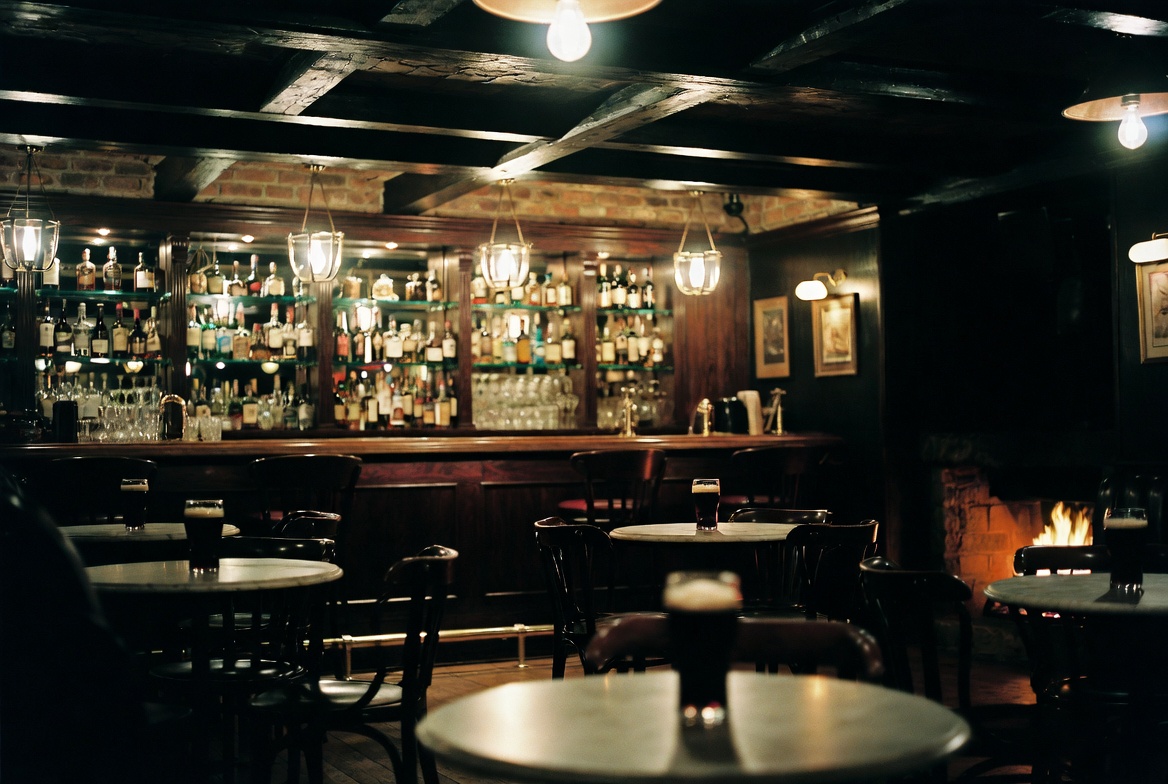
The Irish pub — specifically the Dublin pub of the 1880s, marble-topped, low-lit, generous with conversation — is the spiritual home of the draught Guinness. As Irish emigration carried millions of people to Britain, the United States, Australia and beyond in the 19th and 20th centuries, the pub went with them. By the 1990s it had become an architectural genre: an “Irish pub” could be ordered as a flat-pack from a Dublin design firm.
Inside the pub, the Guinness pour acquired its full ritual: the tilted glass, the patient wait, the top-up, the silence held until the head settled. It is genuinely one of the few drinking traditions where speed is considered a fault.
02 · Sport & Spectacle
Rugby Saturdays, Premiership matches, the Cheltenham Festival.
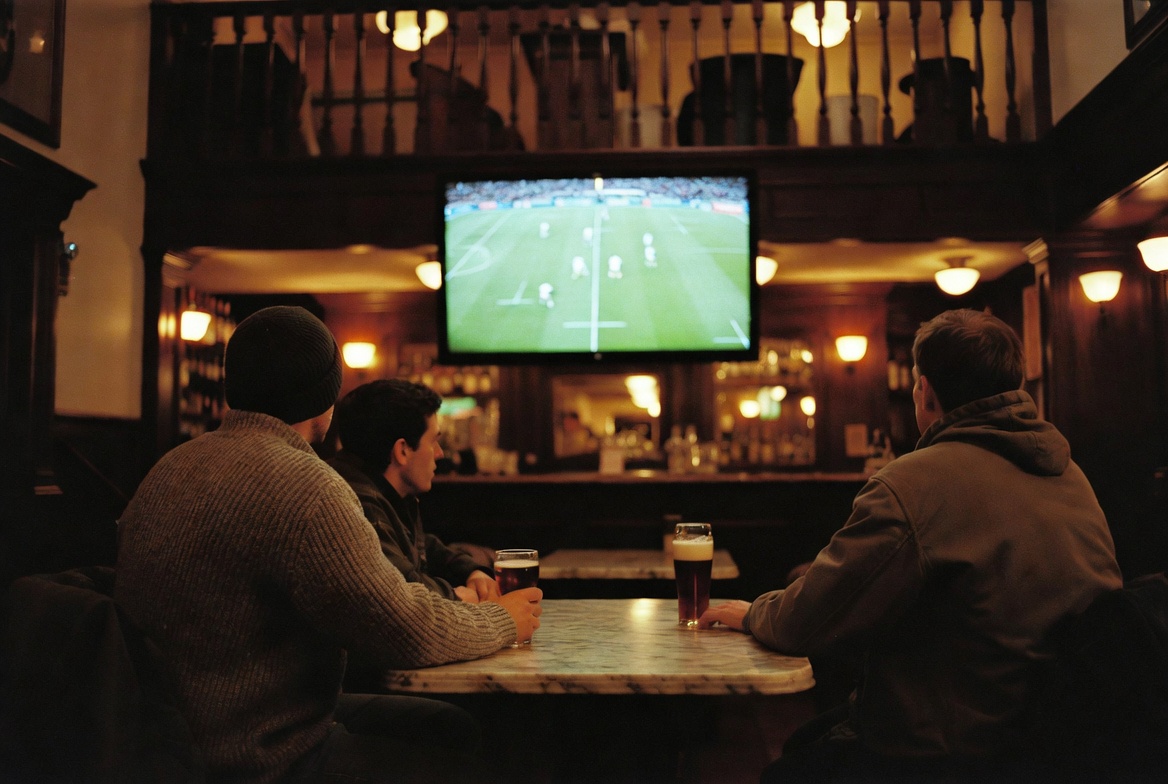
The brand's long association with sport began in earnest in the 1990s, when Guinness took out title sponsorship of the Six Nations rugby championship and a series of horse-racing fixtures. Today the harp appears beside more sporting clocks than any other Irish trademark.
The reason is partly demographic and partly tonal: the same patient pacing that suits a slow pour also suits a long match. The pint, the pub, the post-mortem of the second half — they belong to the same Saturday afternoon.
03 · Posters
The Gilroy menagerie.
From 1929 onwards, the artist John Gilroy drew Guinness's posters — and changed beer advertising forever. His series of comic animal scenes (a toucan with two pints on its beak; a sea lion balancing a glass on its nose; an ostrich swallowing a full pint, the silhouette visible through its neck) became part of British and Irish visual vocabulary. Gilroy's posters share a wall in the V&A. Originals trade in the thousands. The slogans — “Guinness is Good for You”, “Guinness for Strength”, “My Goodness My Guinness” — entered ordinary speech.
The advertising never quite stopped being clever. The 1999 “Surfer” television commercial, with its galloping white horses crashing in slow motion through a wave, was voted the best TV ad of all time by the Sunday Times in 2002. It is, in a way, a moving image of a head settling on a pint.
04 · Audience
Who actually drinks Guinness?
The answer has changed, more than once. In the 1980s it was a beer of older men in Irish and British pubs, with shrinking sales, a slightly stuffy reputation, and a slowly aging demographic. Twenty years of careful reinvention — the Surfer ad, sponsorship of rugby, the widget's revival of cans, and most recently the “splitting the G” pour-line meme that swept TikTok — brought a younger audience back.
By the mid-2020s, Guinness had become the unlikely fastest-growing beer in many UK pubs, partly thanks to women in their twenties and thirties newly choosing it over wine and lighter beers. The launch of Guinness 0.0 amplified the shift: a sober-curious generation found a drink that fit both their pace and their palate. Today the audience is harder to caricature than at any point in the brand's history.
A brief sketch of who drinks what
- Draught: Pubgoers across all demographics. The session beer.
- Original / Extra Stout: Slightly older drinkers, fans of higher carbonation, home pourers.
- Foreign Extra Stout: West African, Caribbean, South-East Asian markets — and curious craft-beer drinkers in the West.
- Guinness 0.0: Sober-curious, athletes, designated drivers, weekday drinkers, anyone who wants the ritual without the alcohol.
The two-minute wait is one of the few public silences modern life still permits.
— Anonymous · Reader letter, 2024