Home · Brewing
The Process
Water, malt, hops, yeast — and one strange roast.
Four ingredients, six steps, two-and-a-half centuries of refinement. The single decision that gives Guinness its colour, its bitterness, and arguably its whole identity is what happens to the barley before it ever enters the brewhouse.
Beer is, in its simplest description, a fermented sugar solution made from cereals. Guinness is the same. The four ingredients have not changed for two centuries. What makes the result distinctive is one decision in step one — and the patience applied in steps four and six.
The Four Ingredients
Water from Wicklow, barley from Ireland, hops imported, yeast unchanged for 130 years.
Water
Drawn from the Wicklow Mountains, soft and slightly mineral. Contrary to a popular tourist myth, it is not drawn from the River Liffey. The brewery has its own dedicated source.
Barley
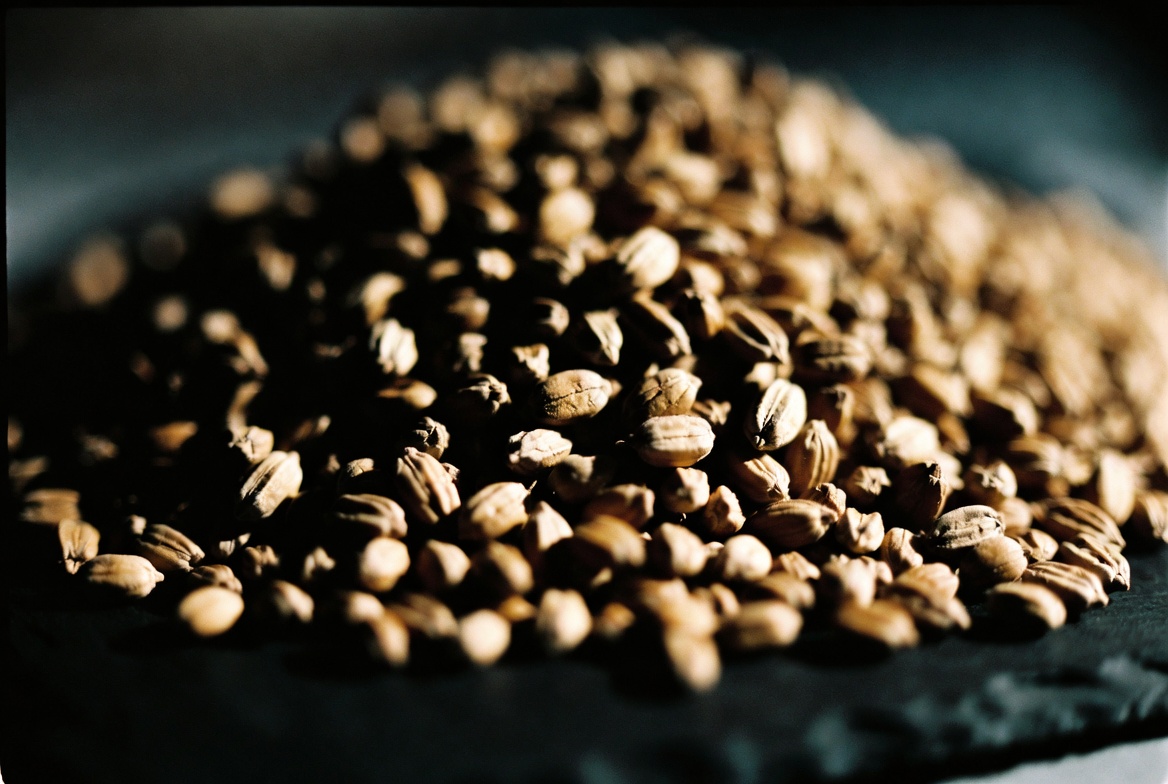
Spring barley grown almost entirely in Ireland. Roughly 70% goes through standard malting; 10% is roasted unmalted at 232°C. That 10% is the colour, the dryness, the soul.
Hops
A blend of bittering hops imported from continental Europe, North America and the UK. The recipe is precise; the suppliers shift seasonally. The bitterness target is constant.
Yeast
A single strain that has been continuously propagated at St. James's Gate for more than 130 years. A small sample is locked in the brewmaster's safe at all times. The strain is, in a real sense, irreplaceable.
The Six Steps
From whole grain to finished pint — a 30-day journey.
1. Malting
Most of the barley is steeped in water until it begins to germinate, then dried with hot air. This unlocks the enzymes needed to convert starch into sugar.
2. Roasting
A separate batch of unmalted barley is roasted at 232°C for 2.5 hours. This produces the dark colour and the dry, espresso-like notes that distinguish Guinness from sweeter dark beers.
3. Mashing
Malted barley, roasted barley and hot water are combined in the mash tun. Enzymes convert the starches into a sweet liquid called wort.
4. Boiling & hopping
The wort is boiled with hops for around an hour. This sterilises the liquid and extracts bitterness, balancing the natural sweetness of the malt.
5. Fermentation
The cooled wort meets the yeast in tall fermentation vessels. Over roughly a week, sugars become alcohol and CO₂. The yeast eats; the beer is born.
6. Conditioning & nitrogenation
The young beer rests for two to three weeks. For draught, nitrogen is added under pressure. The beer is filtered, kegged or canned, and shipped.
The One Decision
The 10% that makes the 100%.
Most beers in the world use only malted grain. Guinness uses about 10% unmalted roasted barley — barley that was never germinated, simply roasted whole.
This unusual choice gives the beer four things at once: its near-black colour, its faintly coffee-like aroma, its dry finish, and a particular chemistry of suspended particles that makes the head so dense and stable. Take that 10% out, and Guinness is no longer Guinness.
The Pour
The 119.53 seconds.
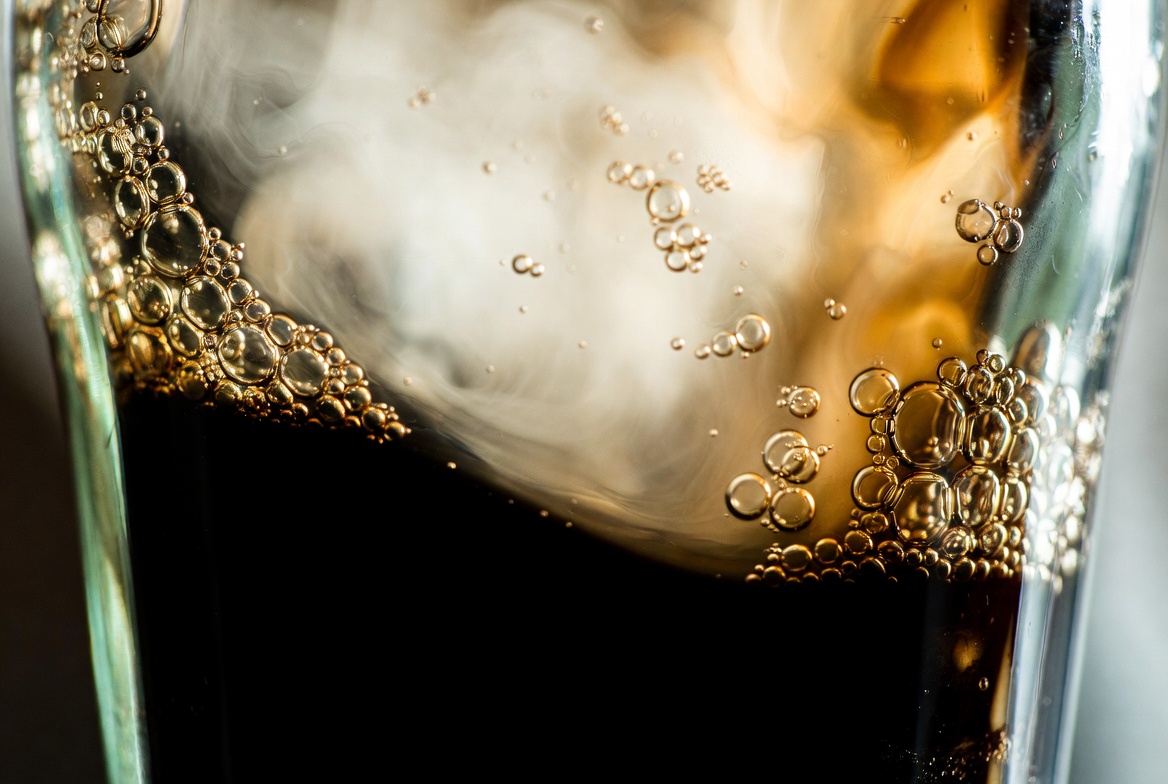
The pour itself is the seventh, unofficial, step. Glass tilted at 45 degrees. Beer pulled to three-quarters full. Glass set down. Roughly two minutes of patience. Then the top-up: glass upright, tap pushed forward, head built to a soft dome that sits a millimetre proud of the rim.
This sequence is not ceremony. It is the time required for the nitrogen-rich beer to release its bubbles, settle, and form the velvet head that defines the drink.
The beer is the same colour it was in 1799. The barley is more thoughtful. That is most of what changed.
— A current St. James's Gate brewer