
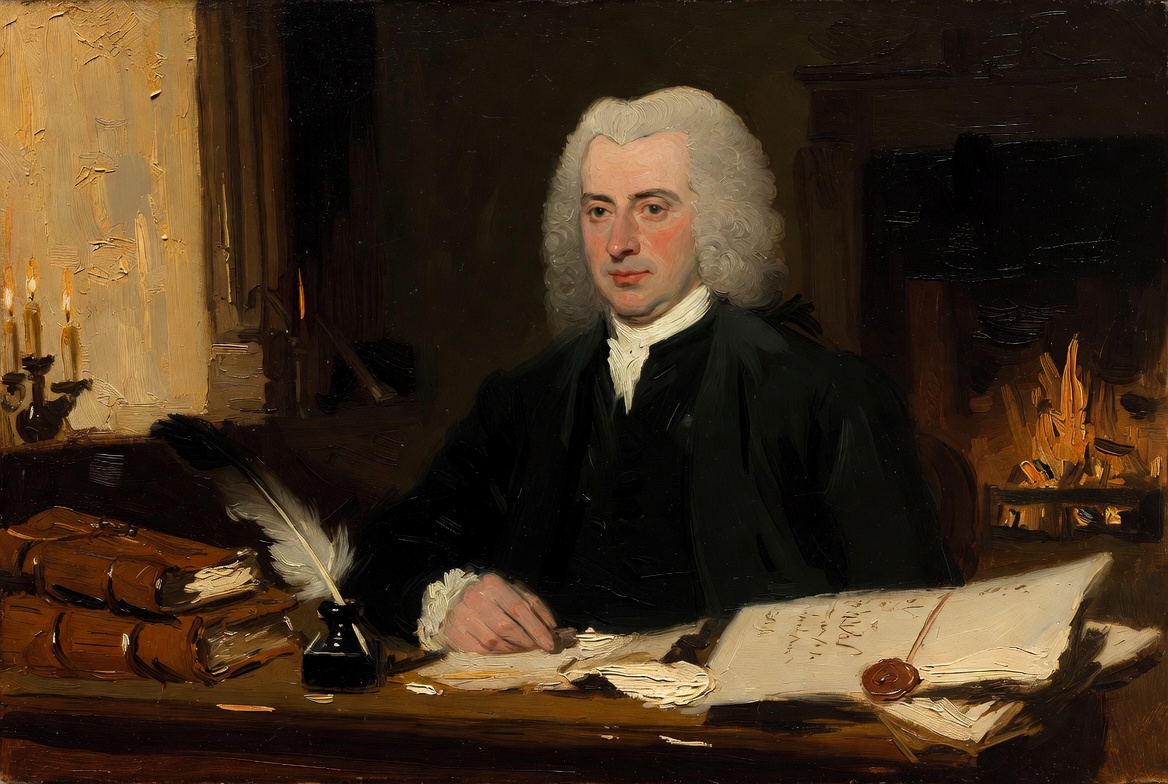
Arthur Guinness was born in 1725 in the village of Celbridge, fifteen miles west of Dublin. His father, Richard, was steward to the Anglican Archbishop of Cashel, Arthur Price — a job that included managing the cellars and brewing the small beer that fed the household's workers. The boy grew up watching mash tuns and copper kettles, learning a trade that would, three centuries later, still be tied to his name.
The Inheritance
When Archbishop Price died in 1752, he left £100 each to Richard Guinness and to Richard's son Arthur. It was not a fortune, but it was enough to start a brewery. Arthur opened his first — a modest ale-house operation — in Leixlip, four miles from Celbridge. He ran it for five years.
Then, in 1759, he did something that no balance sheet of the time would have predicted: he handed the Leixlip brewery to his brother Richard, walked into Dublin, and signed one of the strangest leases in commercial history.
The Lease
The site was a four-acre stretch of disused brewery at St. James's Gate, on the western edge of the medieval city walls. The previous tenants had been bankrupt for years. The buildings were derelict; the brewing equipment was old and inadequate. Few would have looked at the property and seen anything except trouble.
Arthur, however, looked at the rent — £45 a year, fixed in perpetuity — and at the duration: nine thousand years. He paid a £100 down payment, signed his name on the 31st of December 1759, and inherited a problem the Industrial Revolution would soon turn into an opportunity.
The lease did not expire until the 31st of December, in the year 10,759. Arthur was 34 years old. He had just bought time at a wholesale rate.
The Porter Pivot
For the first decades, Guinness brewed ale — the standard Irish style of pale, hopped, sweet beer. But in the 1770s, a London style began to win in Dublin's pubs: porter, a darker, drier, more bitter beer named for the porters and labourers who first drank it.
By 1778, Arthur was brewing porter alongside his ales. By 1799, he had stopped brewing ale altogether. The decision was unsentimental and entirely correct: porter would dominate Irish drinking for the next 150 years, and Arthur Guinness was now its biggest single brewer.
Why the dark beer won
- Industrial scale. Porter brewed in massive vats, aged for months, and shipped without spoiling.
- Working-class palate. Sweetness gave way to dryness; richness gave way to a clean, bitter finish that paired with hard physical work and salty food.
- Better economics. Roasted grain ingredients were cheaper than the lightest pale malts of the era.
The Export Beer
In 1801, the brewery introduced a stronger, more heavily hopped version specifically for export to the Caribbean. The journey by sail took weeks; the conditions were tropical; and ordinary porter would not survive. The recipe was a calculated insurance policy: enough alcohol and enough hop bitterness to outlast the voyage.
This beer is still brewed today. We call it Foreign Extra Stout. The recipe of 1801 is, with mild adjustments, the recipe of 2026 — a kind of edible time-travel that few products can claim.
The Death of the Founder
Arthur Guinness died in 1803, aged 78. He left the brewery to his second son, also named Arthur, who in turn handed it to his son, Sir Benjamin Lee Guinness — the man who would, in the 1860s, expand it into the largest brewery in the world.
By the time the founder died, the lease he had signed forty-four years earlier had another 8,956 years to run. The bet was settled. The dynasty had begun.
Continue: Part II — Nitrogen, Widgets, and the Modern Brewery →