Ask a Dubliner how long a perfect pint of Guinness takes and the answer is given with religious precision: 119.53 seconds. The first time you hear it you assume the decimal is a joke. By the third pour you realise it isn't.
The instructions, simplified
- Take a clean, cool tulip pint glass.
- Hold it at 45° beneath the tap, with the rim a centimetre below the spout.
- Pull the tap forward and let the beer flow until the glass is three-quarters full.
- Set the glass down. Walk away. Do something else for two minutes.
- Return. The beer should be black; the head, an off-white band, just visible at the meniscus.
- Pull the tap backwards and top the glass until the head domes a millimetre above the rim.
- Hand it over.
What is actually happening
Guinness on tap is forced through a five-hole restrictor plate using a 70/30 mixture of nitrogen and CO₂. Nitrogen, unlike CO₂, doesn't dissolve well in liquid — it has to be pressurised in. When the beer flies through the restrictor it gets vigorously sheared. Trillions of tiny nitrogen bubbles are forced out of solution, and most of them stay in the beer, suspended.
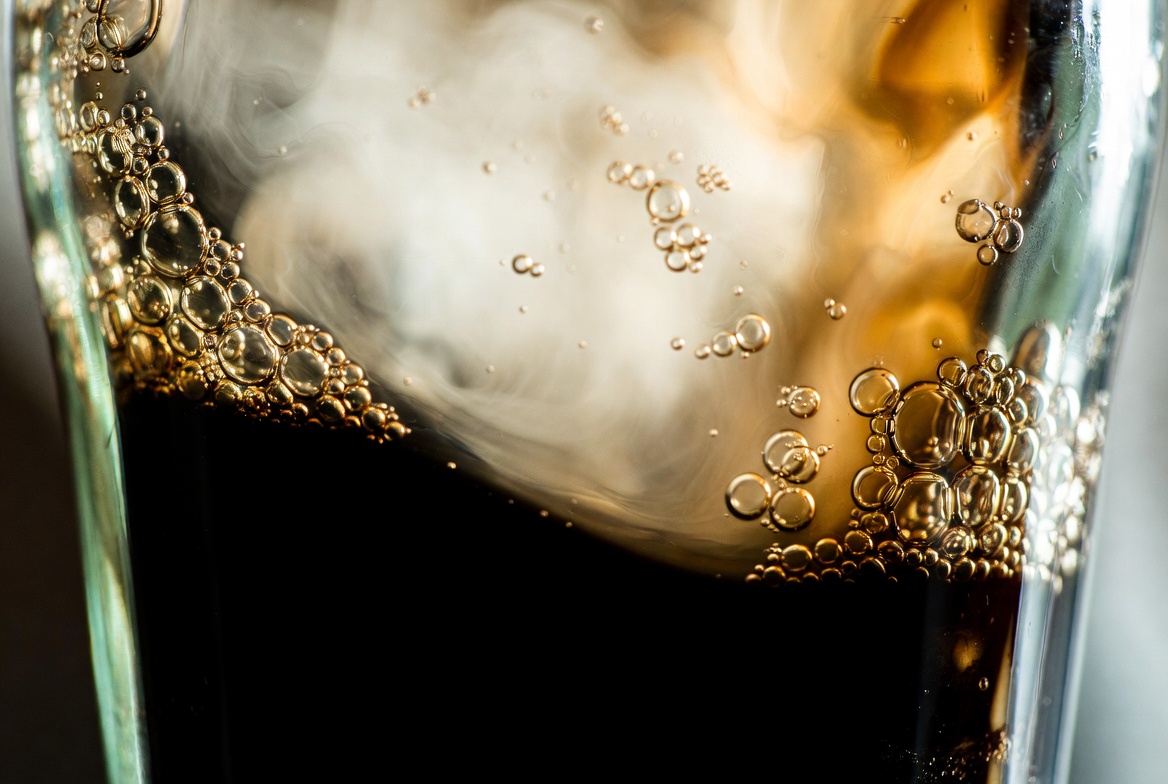
Once the glass is set down, the tiny bubbles rise. Because of the conical (tulip) shape, the bubbles near the wall actually descend — pushed downward by the larger upward column of bubbles in the middle. This is why a settling Guinness looks like it's flowing the wrong way. It isn't magic; it's the pint glass.
After about two minutes, the upward and downward currents have settled, the bubbles have either escaped or coalesced into the head, and the beer reaches its serving state.
The top-up
The second pour is the smaller one. Pulling the tap backwards opens a different part of the restrictor and produces a creamier, more aerated stream. This builds the characteristic dome of head. If you skip the top-up, the head will be thin. If you pour both halves continuously, the head will be foamy and unstable. The two-part pour exists for chemistry, not ceremony.
How to do it at home
Most cans of Guinness contain a widget — a small plastic sphere that does the nitrogen work for you. The instructions are simpler:
- Chill the can for at least three hours, ideally overnight.
- Take a tall pint glass; hold it at 45°.
- Open the can. Pour in one continuous, steady stream until the glass is full.
- Wait one minute for the cascade to settle.
- Drink.
The widget approximates the tap by triggering nitrogen release at the moment of opening. It's not as precise as a proper draught system, but it is, after thirty-five years of refinement, very close.
The cultural function of the wait
The science explains why the wait is necessary. It does not explain why people like the wait. The two minutes are, for most pubgoers, an enforced pause — the bartender places the glass to settle, turns away to do something else, and comes back. The conversation continues. Nobody is doing anything. The two-minute wait is one of the few public silences modern life still permits.
Whether you regard 119 seconds as fluid dynamics or as a small contemplative ritual, the result is the same: a pint that arrives slightly later than it would if you ordered something else — and which you will, almost without thinking, sip a little slower in return.
Read also: The full brewing process →