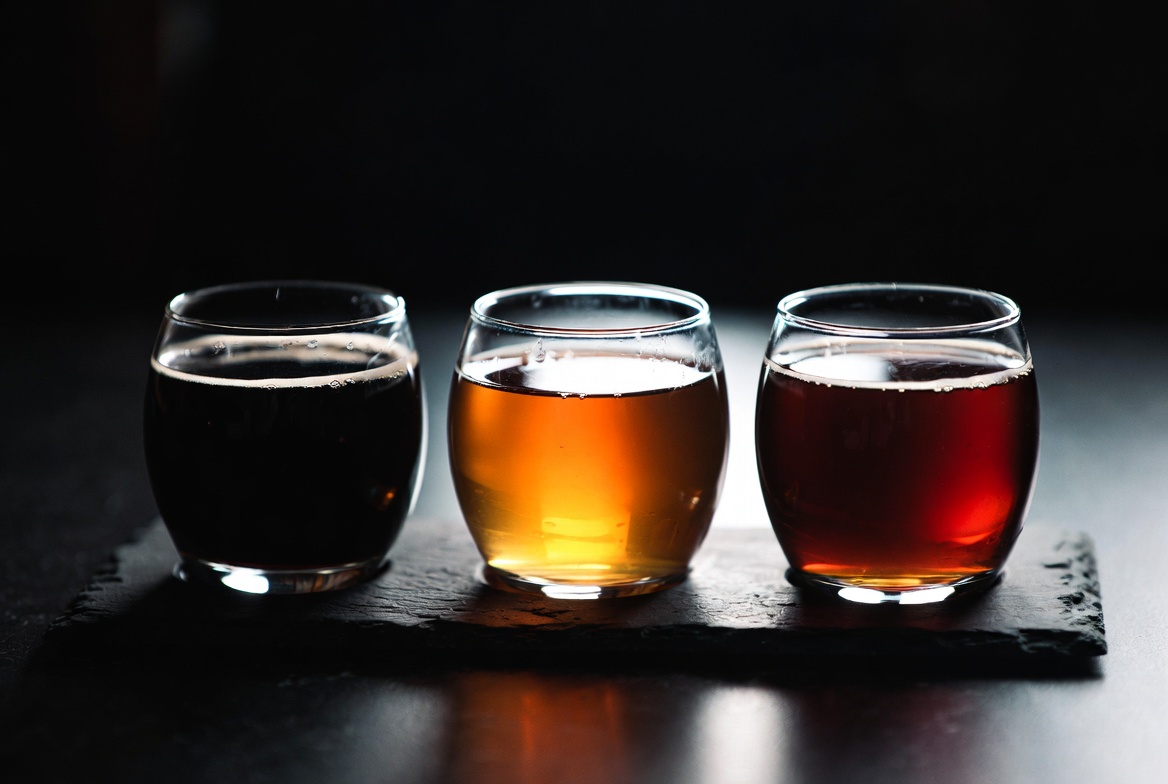
Walk into a craft beer shop today and you will find both styles on the shelf: porters at one end, stouts at the other. Their colours are practically identical. Their flavour profiles overlap heavily. Most drinkers cannot reliably tell them apart in a blind test.
This is not a failure of the drinker. The two words have been chasing each other's tails for over two centuries.
Where porter began
In the early 1700s, London publicans served a popular blend of three beers in one glass — one fresh, one aged, one brown. Sometime in the 1720s, brewers worked out a way to brew a single beer that tasted like the blend. They called the new beer “entire”, and it became famous in the markets and along the docks where the porters and labourers drank it. The name porter stuck.
By 1750, porter was the dominant beer in London. By 1780, it was the dominant beer in Dublin too — which is why a young Arthur Guinness switched his ale brewery to porter in 1778.
Where stout came in
For most of the 1700s, “stout” was simply an adjective. Stout porter meant a stronger porter. Stout ale meant a stronger ale. The word was a proportion, not a category.
By the early 1800s, the noun version was becoming common. Brewers started selling “Stout” on its own as a name for the stronger end of their porter range. Guinness's 1801 export beer was called West India Porter on the casks, but appeared on bills as Extra Foreign Stout. By 1840, “stout” was its own thing.
The word that won
Through the 19th century, the two words drifted in usage but stayed close in flavour. Then in the early 20th century — partly because of WWI restrictions on grain — ordinary porter began to weaken. Stout, by contrast, kept its strength and its character. By the 1950s, ordinary porter was effectively extinct in Britain and Ireland. Stout had eaten porter.
Guinness still sometimes called itself a porter on its own labels until the 1970s. From then on, the labels say stout. The recipe, throughout, barely changed.
What it means today
The craft-beer movement of the late 20th century resurrected porter as a deliberately separate style. Modern porters tend to be a touch lighter, less roasty, less bitter, more chocolaty. Modern stouts tend to be drier, more roasted-coffee, more bitter. But the line is curatorial, not chemical. A modern American porter and a modern Irish stout, brewed by competent breweries, will land within a hair of each other.
Or, more bluntly: the difference between stout and porter today is mostly historical. Stout is the word that won. Porter is the word that came before. And Guinness, which spent fifty years comfortably calling itself both, is the historical bridge.
Read also: How Guinness is brewed today →